
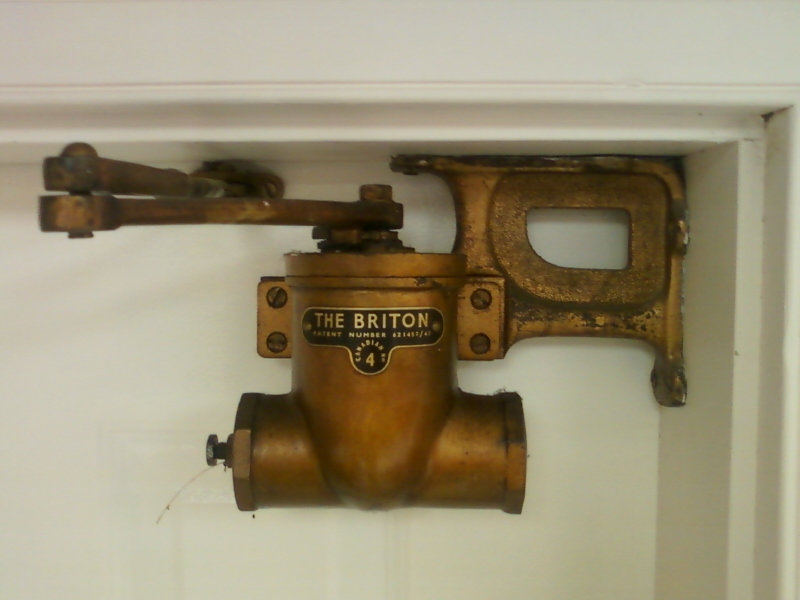
Historic buildings across New England are full of hardware that was built to last — and few pieces represent that better than old pot-bellied door closers. Found in early 1900s schools, churches, municipal buildings, and multifamily homes, these heavy-duty closers are still in service today.
For property owners, facility managers, and historic building caretakers, maintaining these closers is essential for safety, compliance, and preserving architectural character.
What Are Pot-Bellied Door Closers?
Pot-bellied door closers get their name from their rounded, cast-metal body shape. Unlike modern slim hydraulic closers, these vintage units were designed with durability and serviceability in mind.
Common characteristics include:
- Heavy cast iron or steel construction
- Large internal springs
- Early hydraulic or mechanical damping systems
- Surface-mounted installation
Many of these closers were installed 80–120 years ago — and many are still operating today.
Why Pot-Bellied Closers Are Still Used Today
Built for Longevity
These closers were engineered during a time when hardware was expected to be repaired, not replaced.
Ideal for Heavy Doors
They were commonly installed on:
- Solid wood entry doors
- Fire-rated corridor doors
- High-traffic commercial entrances
Important for Historic Preservation
Replacing original hardware can impact historic building authenticity and sometimes violate preservation guidelines.
Common Problems With Old Pot-Bellied Door Closers
Over decades of use, even the best-built closers develop issues such as:
- Broken or fatigued springs
- Oil leaks in hydraulic models
- Loose mounting holes in old wood doors
- Internal wear with no available factory parts
Because many manufacturers no longer exist, repair often requires custom machining or rebuild expertise.
Professional Pot-Bellied Door Closer Service in New England
Property owners across Massachusetts and Rhode Island often assume replacement is their only option — but that’s not always true.
Northeaster Security Safe & Lock can repair, rebuild, or replace old pot-bellied door closers depending on condition and customer goals.
Repair
If the closer is structurally sound, internal service can often restore function.
Rebuild
For heavily worn units, full disassembly and rebuild can extend service life while preserving original hardware.
Replacement
If repair isn’t practical, modern heavy-duty closers can be installed with minimal visual impact to historic doors.
Why Repairing Pot-Bellied Closers Often Makes Sense
Many building owners choose restoration because it:
- Preserves historic building character
- Maintains original hardware when required
- Saves cost versus structural door modifications
- Keeps heavy doors operating safely
Who Should Consider Service?
You may benefit from service if your building in Massachusetts or Rhode Island has:
- Doors that slam shut or won’t latch
- Closers leaking oil
- Visible cracked or damaged closer bodies
- Doors that no longer meet fire or safety closing requirements
Trusted Local Experience Matters
Working on antique door hardware requires specialized tools, parts fabrication ability, and historic hardware experience. Choosing a company familiar with New England building styles and older commercial construction can make a major difference in repair success.
Final Thoughts
Old pot-bellied door closers are a small but important part of historic building function and character. With proper repair or rebuild work, many can continue operating for decades to come.
If you manage or own a building with vintage door closers, professional evaluation can help you decide whether repair, rebuild, or replacement is the best long-term solution.